语法-虚拟语气
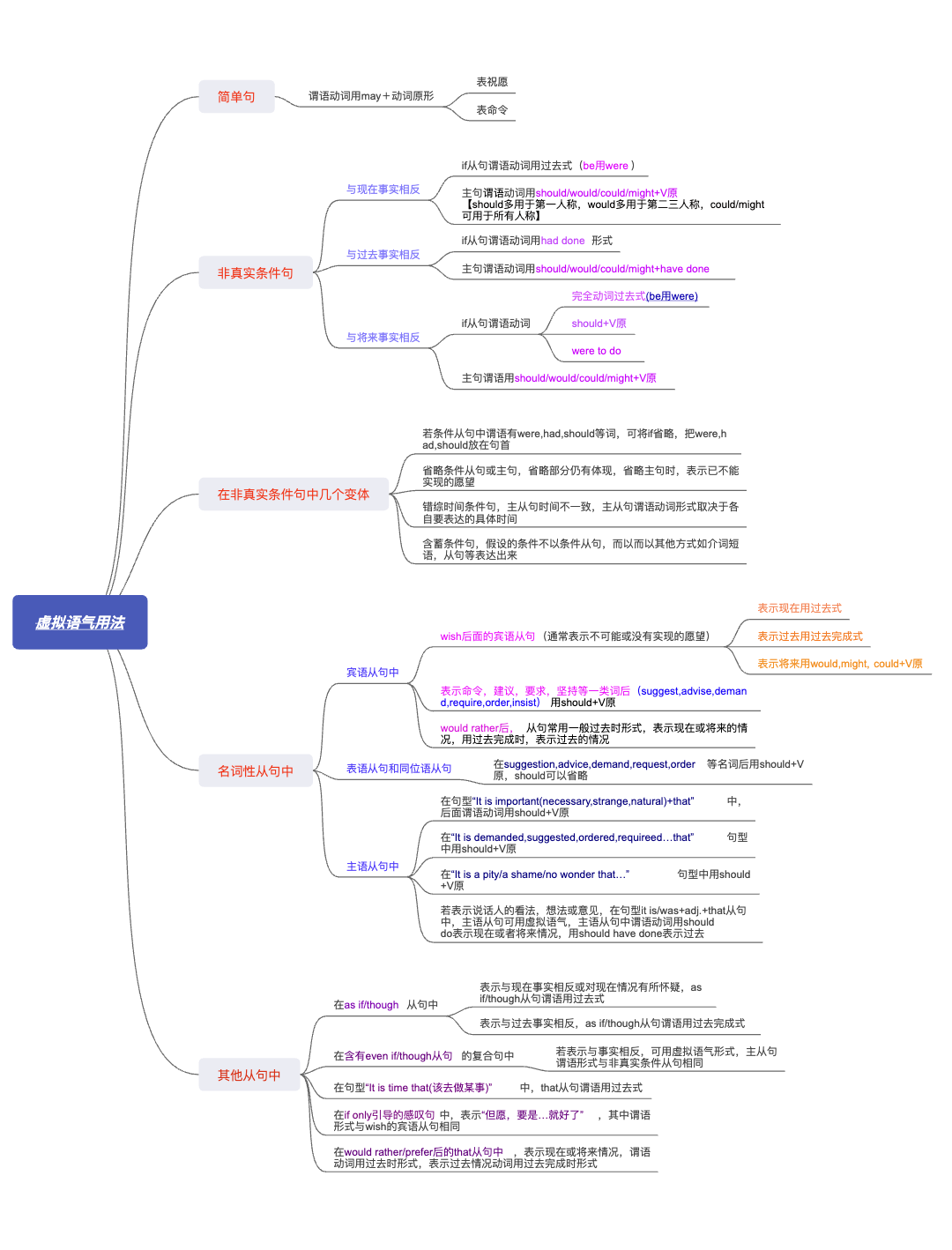
英语中的语气分为陈述语气、疑问语气、祈使语气、虚拟语气四类。虚拟语是一种表示假设状态的句型,是一种特殊的动词形式;表示所说的话不是一个事实,而只是说话者的一种假设,主观愿望,建议,猜测或不大可能实现的空想。根据虚拟语气的特点我将其分成了四大块,请往下看。
根据时态的不同,主从句的谓语动词可分为以下3种情况
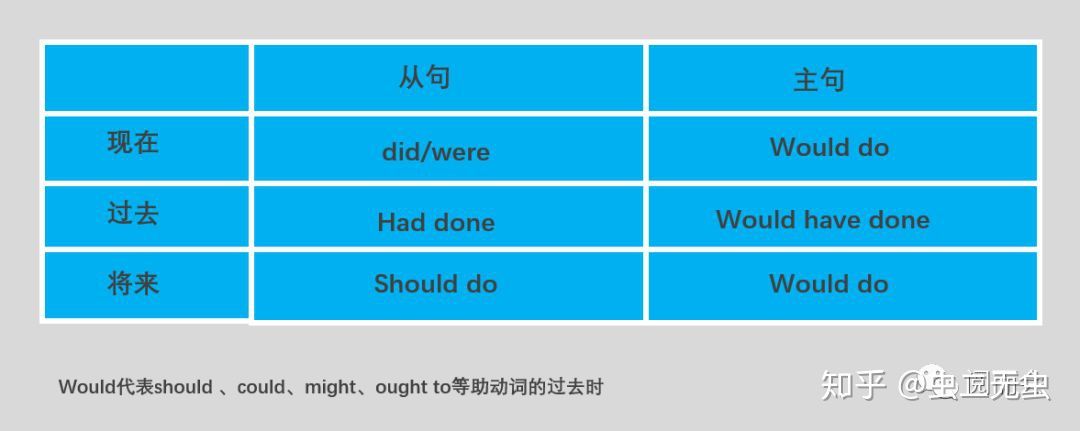
与现在相反:

例:If he studied harder,he might pass the exam(如果他努力学习,他可能通过考试了),与现在事实相反
例1:If I were you ,I would beat him,注意虚拟预期只有were没有was等。 例2:If he were here,I would beat him
过去相反:

例2:If he had had money,he would have bought a car(如果他那时有钱,他就会买辆车)
此句中第一个had为过去完成时助动词,第二个had为have(有)的过去分词。
将来相反:

例:If it should rain,the game would be put off(如果下雨,比赛会推迟)
使用虚拟语气的常见结构或从句:
1.wish之后接宾语从句时一定要使用虚拟语气。
与现在事实相反用一般过去时
例:I wish he were here(我真希望他现在就在这里)
例:I wish I knew everything in the world.(我希望了解世界的一切)
与过去事实相反用过去完成时
I wish (that) she had been here(我真希望她当时就在这里)
I wish that I could have gone with you last night.(我真希望昨晚能和你一起去)
注意:hope 之后也常接宾语从句,但hope一般表示可以实现的愿望,宾语从句用陈述语气,wish表示很难或不大可能实现的希望,宾语从句用虚拟语气。
2. if only用于与现在或过去相反的虚拟语气中
if only(要是……就好了)与I wish一样,也用于表示与事实相反的愿望,其后所虚拟语气的时态与wish后所接时态的情况相同
与现在事实相反:If only he were here(他现在要是在就好了)
与过去事实相反:If only I had known it earlier(我要是早知道就好了)
3.I would rather后用与现在或过去相反的虚拟语气
在would rather,would sooner后的that从句中,句子谓语习惯上要用虚拟语气,表示”宁愿做什么”
一般过去时表现在或将来的愿望:I’d rather you came next Saturday(我希望你下周来)
过去完成时表对过去的愿望:I would rather (that)I had studied harder when young(我真希望年轻的时候多努力学习)
4.as if(though)从句有时用虚拟语气 就好像
以as if(as though)引导的方式状语从句或表语从句,有时用虚拟语气。如果主句谓语动词为现在时,从句谓语多用过去时;如果主句谓语为过去时,从句谓语多用过去完成时。even if,even though 等所引导的让步状语从句用法一样。
例:Mr. Wangle loves me as if I were his own child(王先生爱我就像我是他的孩子一样,与现在事实相反)
例:The old worker works as though he were a young man.(这个老员工工作起来就像个年轻人)
例:Even if he were here himself,he should not know what to do(即使他亲自来他也不知道做什么)
5.常用的介词或介词短语表虚拟条件
主要有without(没有),but for(要不是),in the absence of(如果没有)或were it not for(要是没有),but that(假设……不)等
例1:But for his help,I couldn’t have done it(要不是没有他的帮助,我无法办这事)
例2:In the absence of gravity, there would be no air around the earth.(如果没有重力,地球上不会有空气)
6. It’s time that
it is time that +从句,从句要用虚拟语气,有两种方式:
1、从句用作一般过去时
例:It is time that we went to bed.我们该上床睡觉了。
2、从句用should+动词原形不能省略
例:It is time that we should go to bed.我们该睡觉了。
should省略
- 在表示建议,要求,命令,想法的动词后的从句里, 用should + 动词原形, should 可以省略.
His doctor suggested that he (should) take short leave of absence.
- 在表示建议,要求,命令,想法的名词后的从句里, 用should + 动词原形, should可以省略. 如 advice, decision,agreement, command, decree, demand, determination, indication, insistence, order, preference, proposal, request, requirement, stipulation etc.
His suggestion was that everyone (should) have a map.
- 在It is/was +形容词后的that 从句中用should的结构, should 可以省略. 这类形容词常见的有: advisable, anxious, compulsory, crucial, desirable, eager, essential, fitting, imperative(绝对必要), impossible, improper, important, natural, necessary, obligatory, possible, preferable, probable, recommended, urgent, vital etc. It‘s natural that she (should) do so.