音调
- 升调:没有结束,不肯定
- 降调:结束、肯定
语调
学习视频: 语调

- 意群/调群 划分
- 调核位置: 意群里重读的实词
- 语调Tone,升还是降
这个文章也不错: link
调群切分
切分不是固定的,结合语境有不同切分方式
一个意群结束时,稍微停顿、换口气,或把尾音稍微拉长,再进入后面的词组群
1、并列连接词 (and、but、or、because、so 等) 前断句
2、从属连接词 (that、which、who、how、what、why、when、where 等) 前断句
调核位置
调群包括调冠、调头、调身、调核、调尾这五个成分。
调头指第一个出现的重读音节
调核: 存在感最强的部位,根据强调语境而变化。一定有,而其它不一定有
调尾: 调核后面部分,和调核一起语调升降
You still have my contact details/ right? con是调核,tact和details是调尾
降调
调核降调,有调尾就一起降,否则类似拉长来降调。
出现:陈述句、特殊疑问句、祈使句、感叹句。
May I take your order? 特殊疑问句。
Give the book. 祈使句
What a beautiful sunset. 感叹句。
升调
调尾音不能太高,但需要保持高于调核。
没有调尾,就拉长。
出现:一般疑问句末尾。升调特殊疑问句
Do we have any ideas yet? yet是调核。
特殊疑问句也可以是升调,如果不确定刚才对方说的话的内容,让别人再重复一遍
When did she see him?
降升调
出现频率比较低,表示 话里有话。
降和升可以同一个音节也可以两个音节。
Are you sure? 怀疑的语气。
Yeah, that sounds exciting. sounds降调,exciting升调。 不爽的语气
长句子
- 升调在前,降调在后的句子类型
- 带 or 的选择疑问句
- Would you like coffee, or tea
- 状语从句在前的陈述句
- If you two don’t stop fignting, we’ll never get finished.
- 列举事物的陈述句
- I have a pen, a postcard, a map, and some pictures.
- 带 or 的选择疑问句
- 降调在前,升调在后的句子类型
- 普通反意疑问句
- I told you the story, didn’t I?
- 陈述句+不肯定的附加语
- Tell me the truth, tom.
- 普通反意疑问句
- 前后都是降调的句子类型
- 降调反意疑问句
- He’s the worst nurse, isn’t he?
- 状语从句在后及并列的陈述句
- He will know better, when he get older.
- 降调反意疑问句
发音-发音规则 昂克
链接: https://www.bilibili.com/video/av19992217?from=search&seid=14758661060311518388
总结
- 辅+元,连读: not at all, 如果辅音是/r/ /l/ /ŋ/, 辅音双写: for a
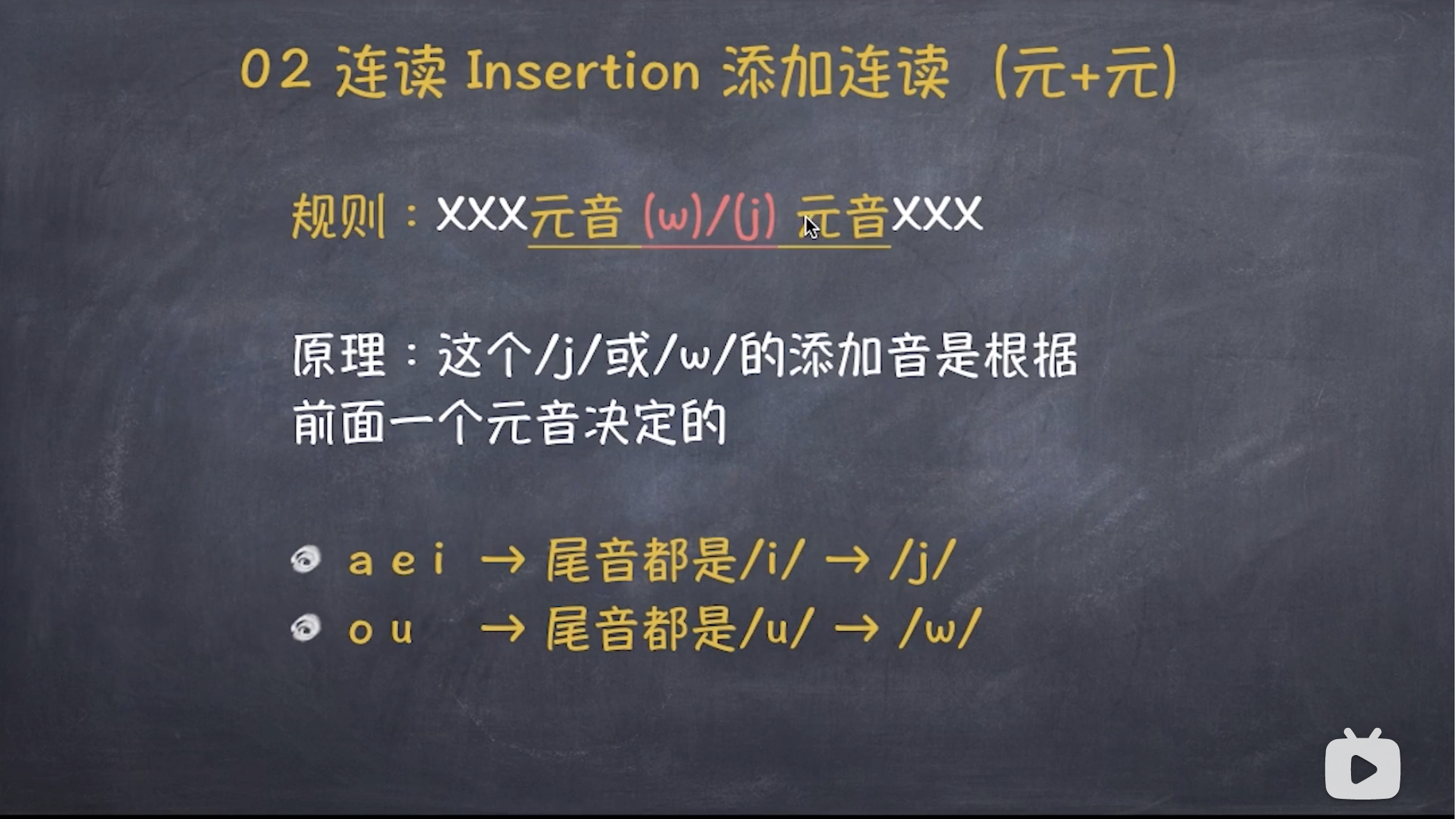
- 元+元,添加连读,当尾元音是i和u时,自动添加/j/或/w/。do it, go out. /ɔː/自动加r, saw in
- 特殊添加连读: /n/+/s/=/n ts/ since
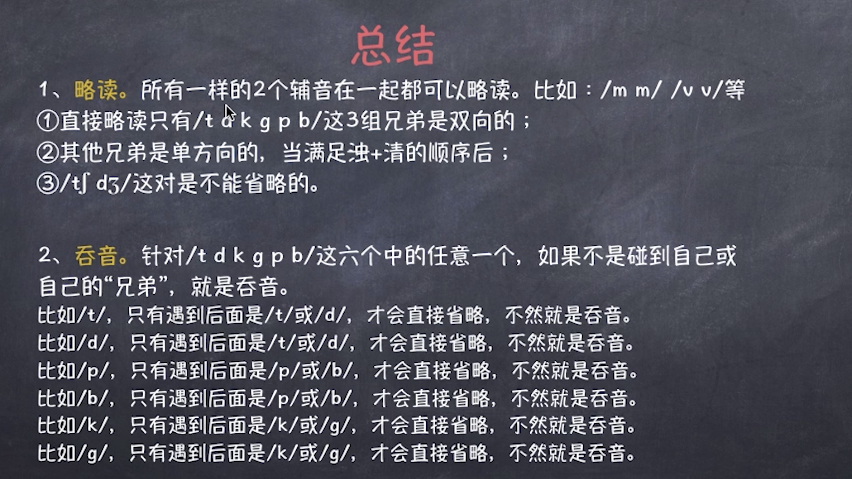
- 辅+辅,连读, 三组内的略读只读后面的,所有辅音相同略读,浊音在前清辅音在后可略读前面的:v f, z s,ð θ. 不可略读:/tʃ/ /dʒ/
- 辅+辅,吞音,三组里碰到后面是三组里非兄弟辅音就吞音(也包含其他非爆破辅音)。吞音保留时值和状态不发音, that cat
- 吞音喉音停顿:/tən/ /dən/ 只留ən, written
- 略读 h-droping: him, his, he, her。 give him /givim/
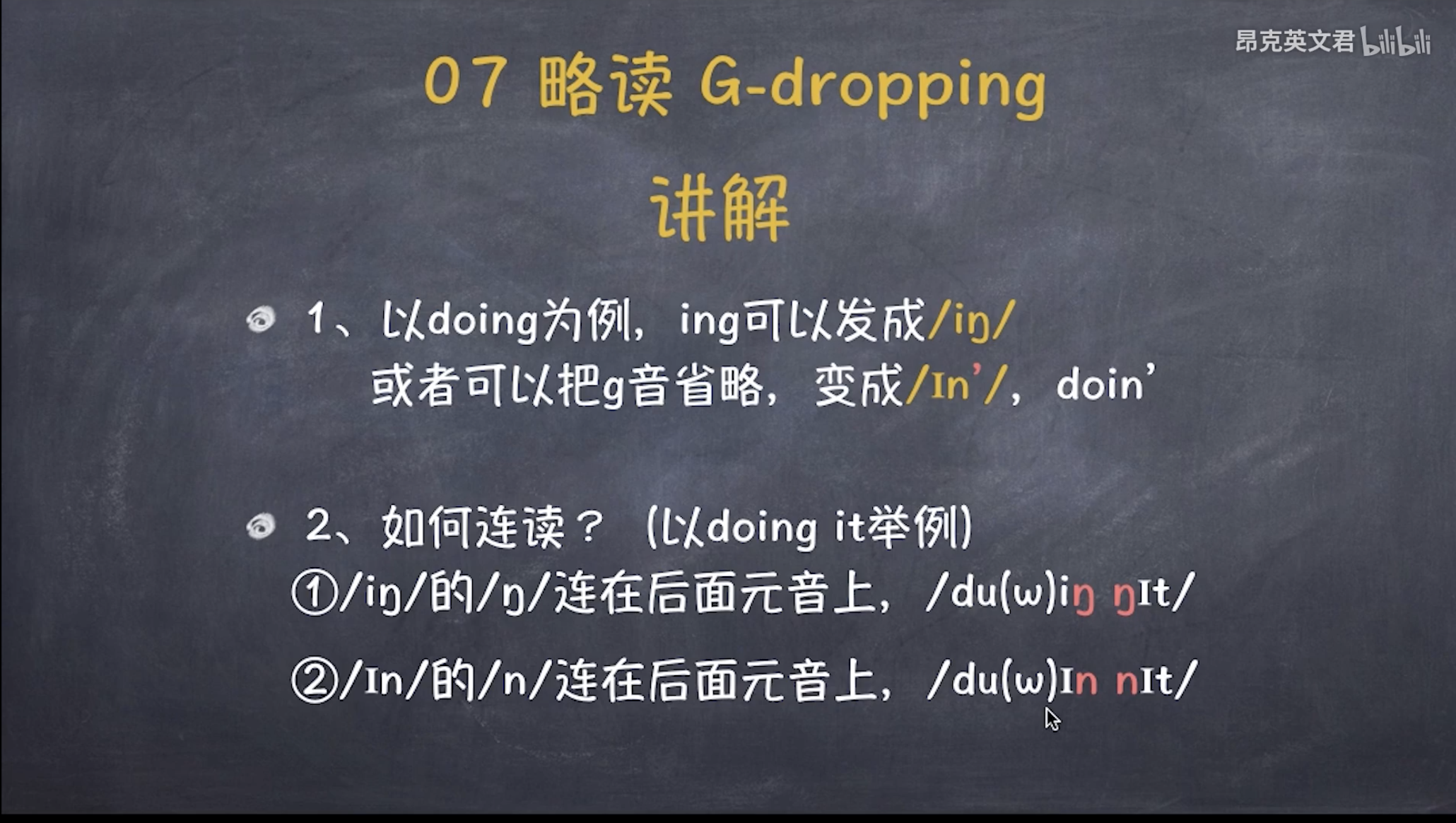
- 略读 g-droping: doing. ing里的
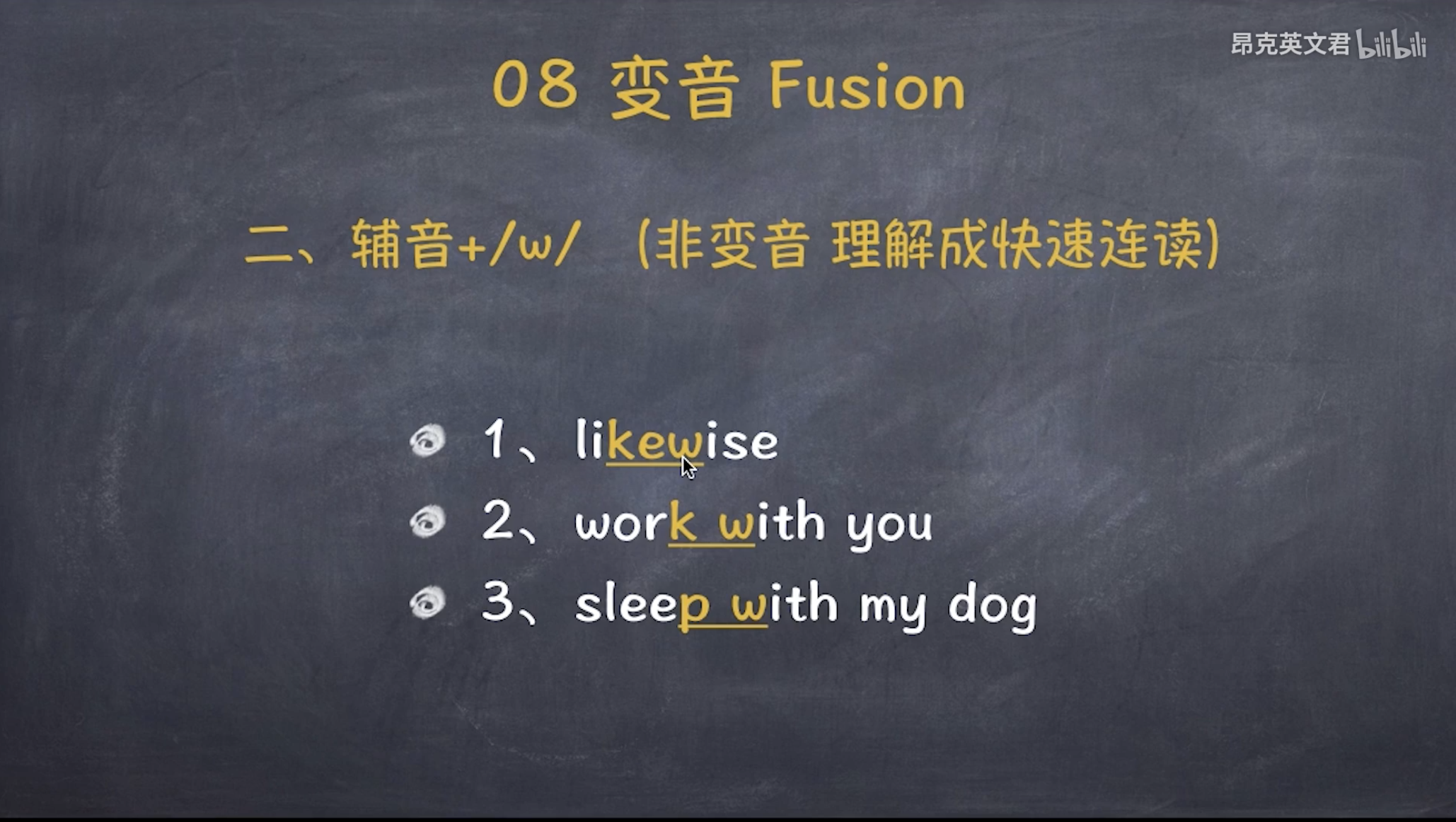
- 变音: about you. would you, rock you. /t/+/ju/;/d/+/ju/。 miss you: sh
清辅音+元,清辅音浊化- 不同意群不连读
- 元音+元音,如果读音相近,可以连一起,比如law office. lawwfis
- schewa: for, of, have, or, and等,元音变成ə
清辅音浊化
S后面的清辅音浊化现象可以这样归纳:清辅音跟着一个元音,前面又有一个 s ,无论是在单词的最前面还是中间,只要是在重读音节或次重读音节里,一般都读成对应浊辅音,如stand,strike,speak,sky 等等,值得一提的是strike不是不用变,而是它“tr”本来所发的音已是浊辅音,但也要变成“dr”所发的那个音 (如dream中的“dr”所发的音).
t-d k-g f-v s-z p-b
连读prime linking 辅+元
what did he do in an hour


flap t=d
not at all
an /ən/

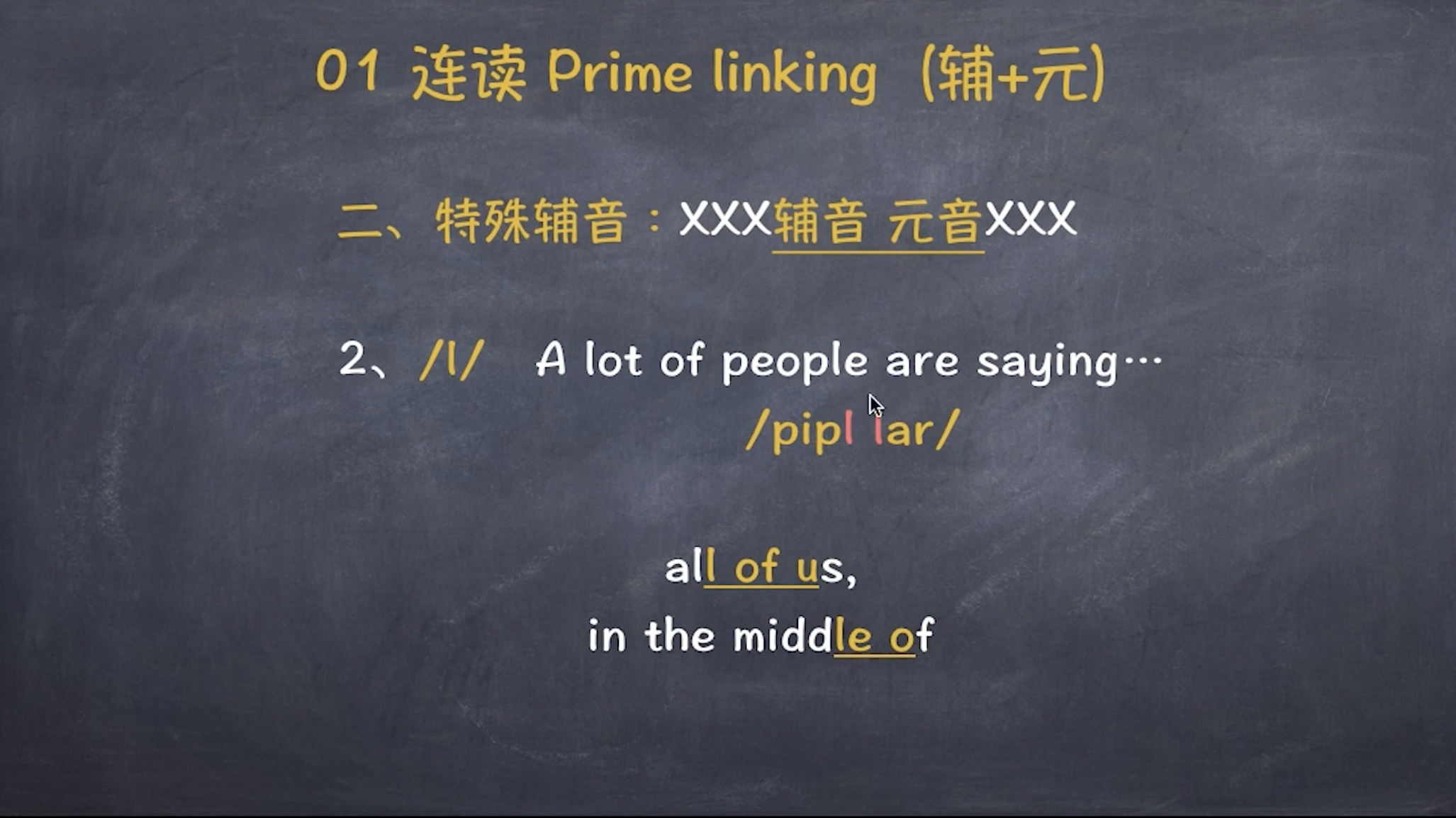
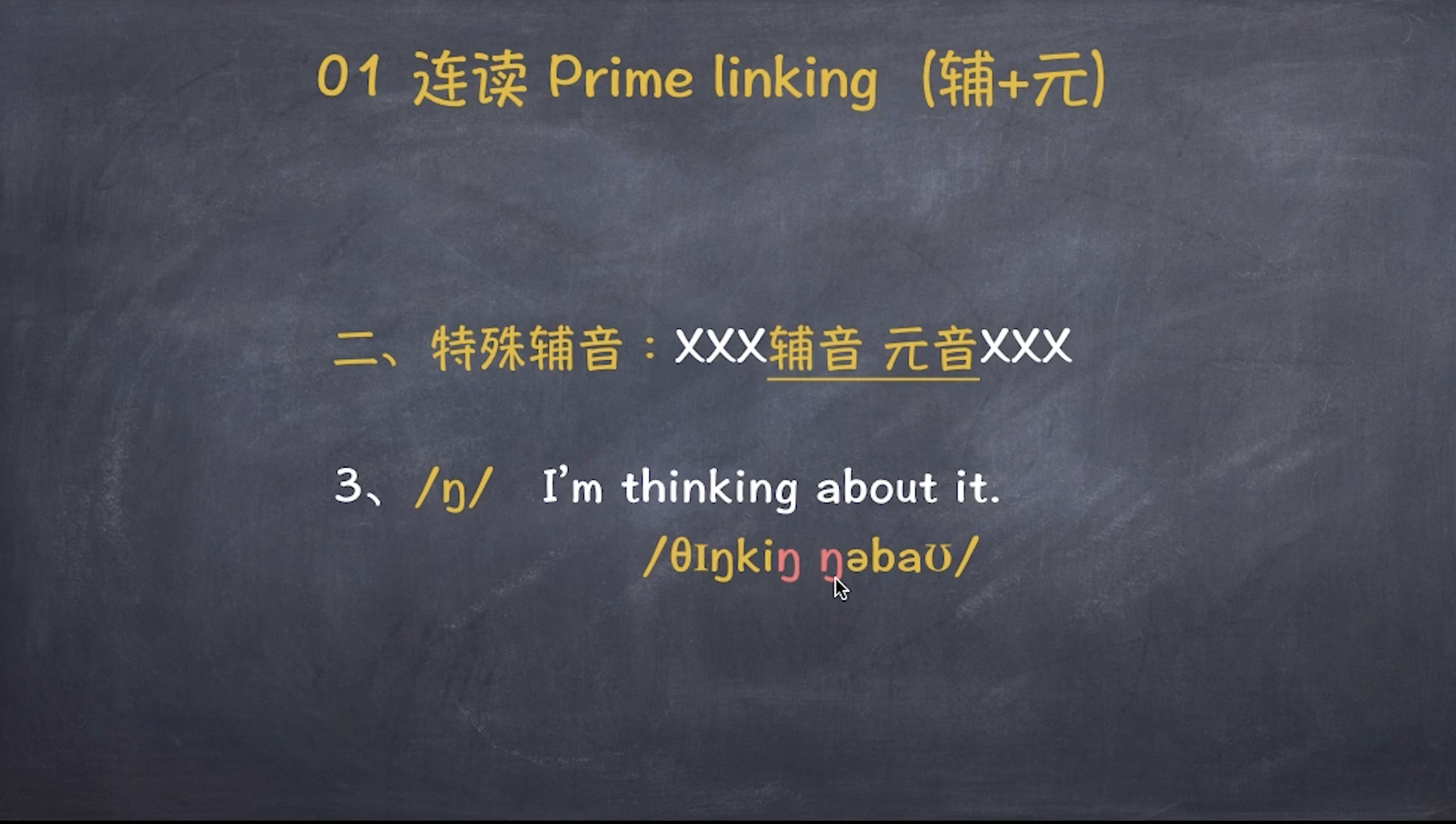
about it 其中t浊化为d
连读 insertion 元+元

d吞音吞掉


连读 geminates 辅+辅

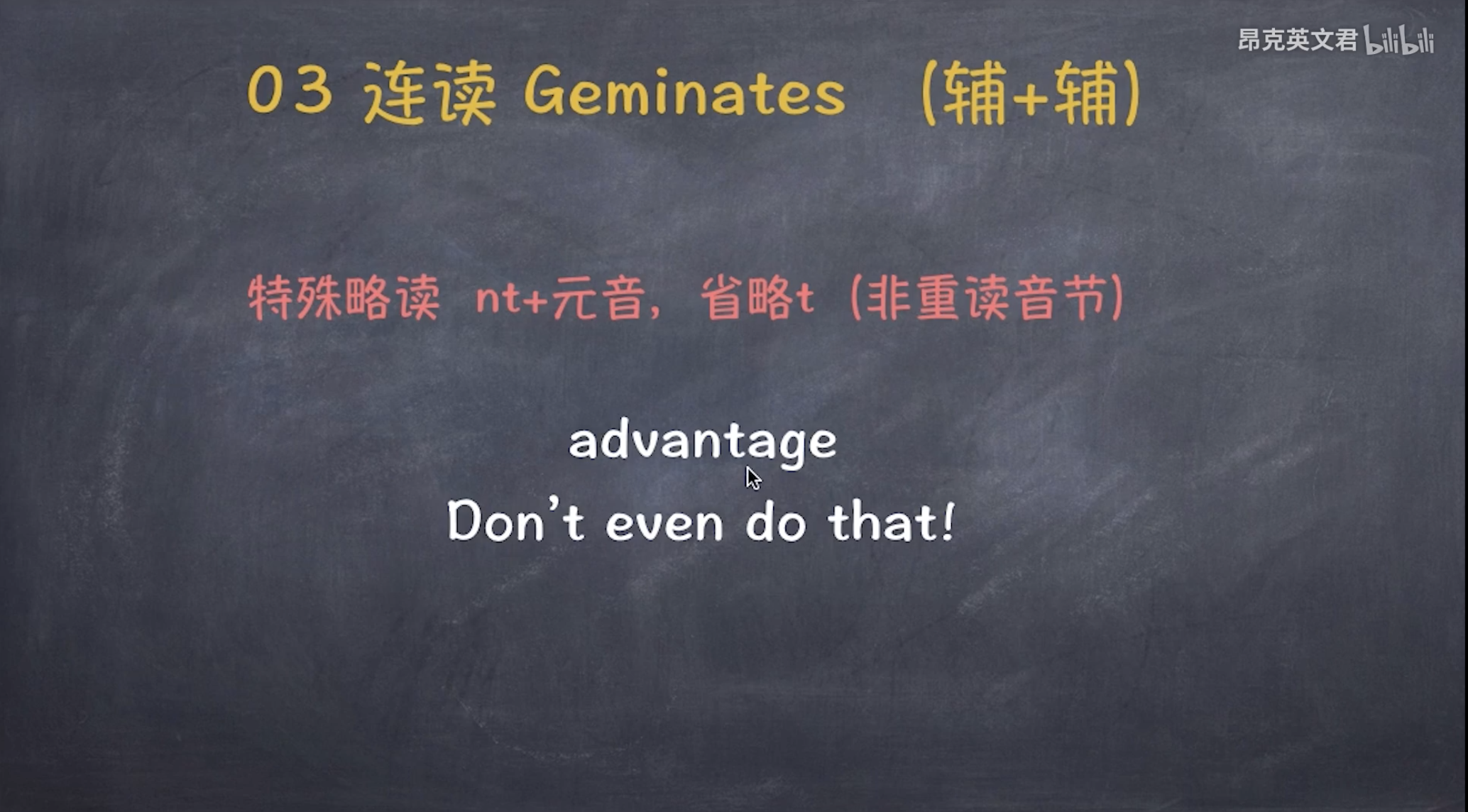
to弱读为t


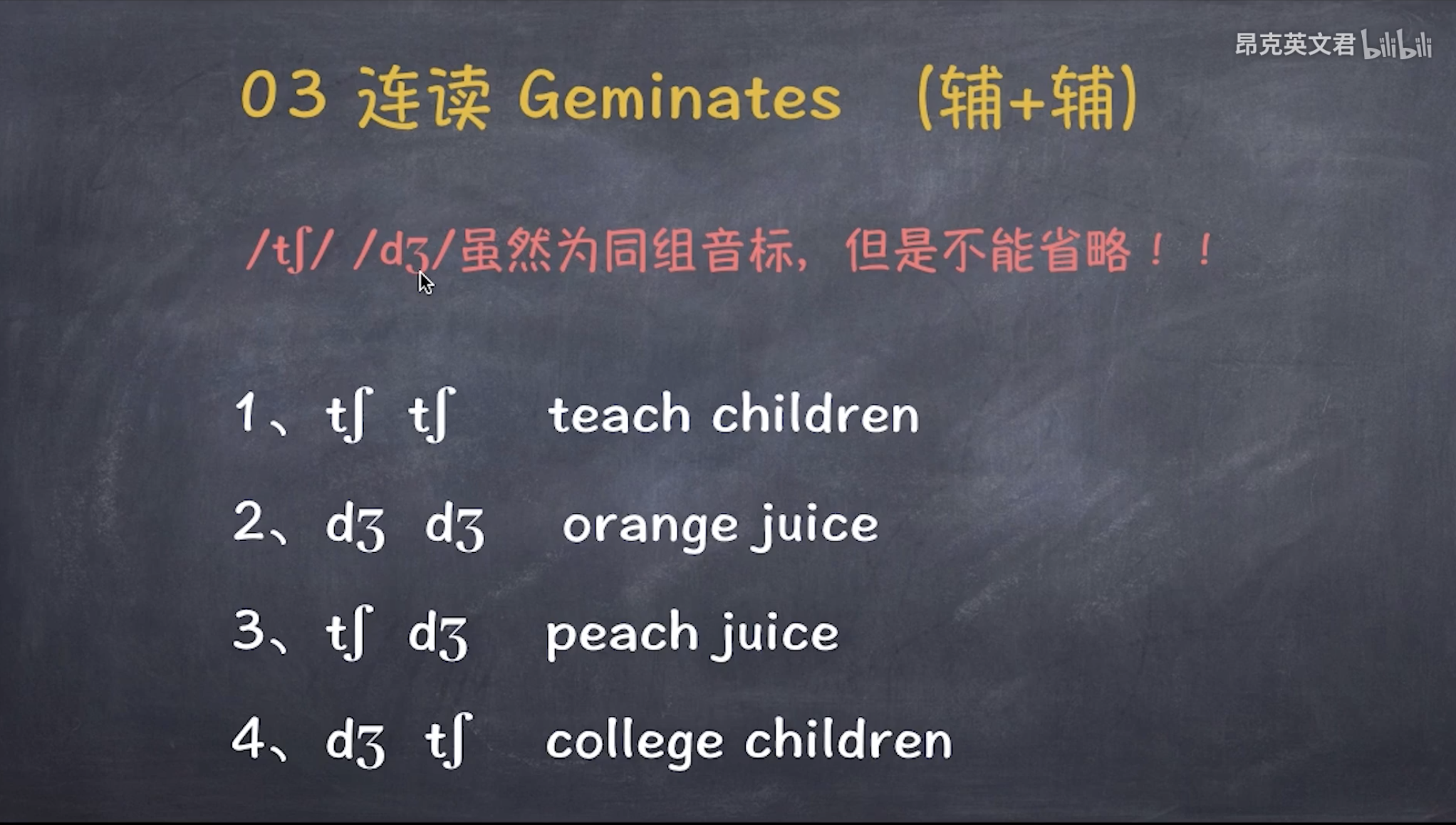
吞音 geminates 辅+辅
什么是吞音,做出口型但不发声,保留这个音的状态和时值。当且仅当以上任何一个爆破音后面如果紧接着是一个辅音或者半元音,那么这个爆破音将不再发音,仅空半拍就行
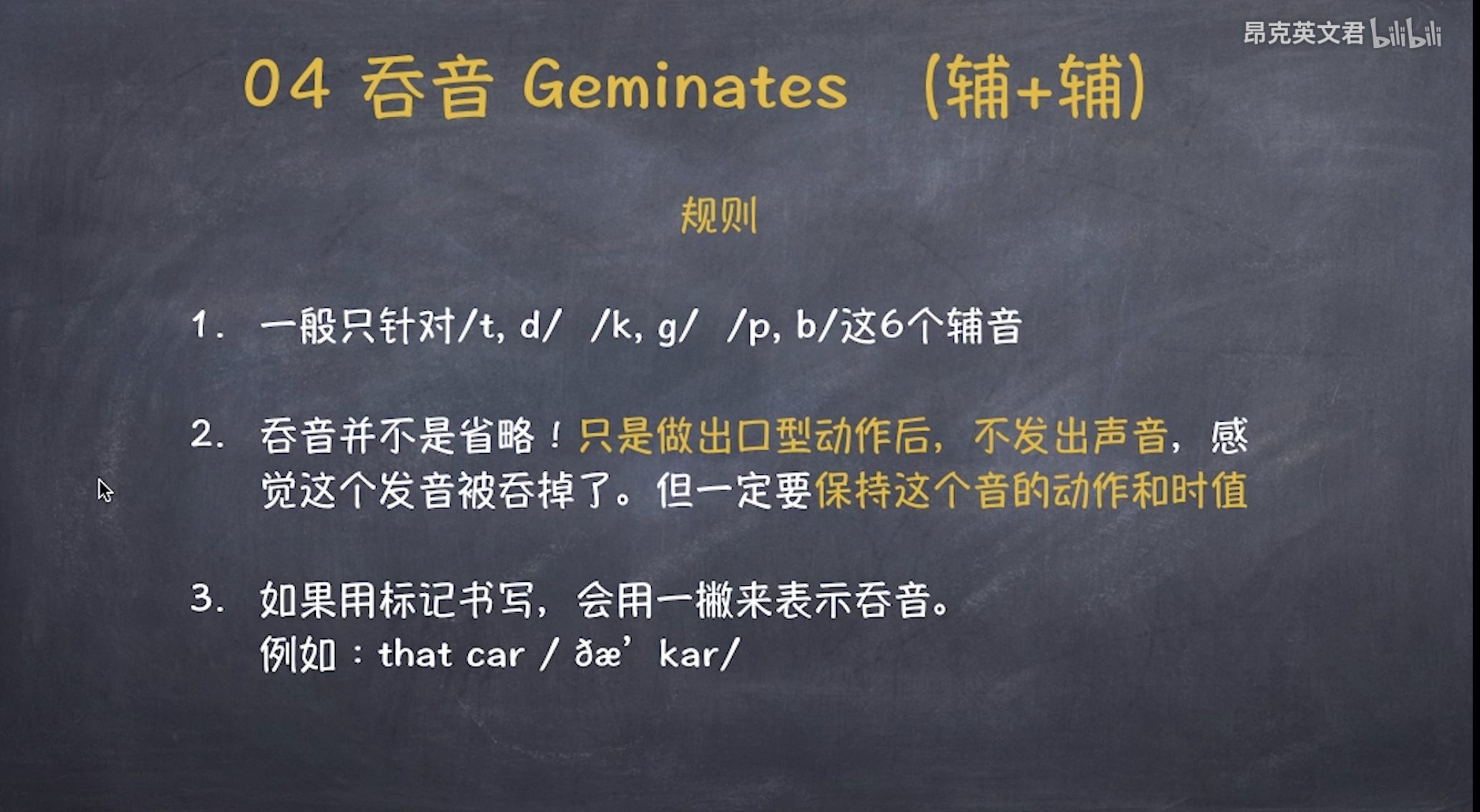
that口语中通常吞掉后面的
另外/d/ /t/ /k/ /g/ /b/ /p/作句子结尾,也吞音
比如最常见的 oh,my god 其实最后一个d是不发音的
吞音 global stop喉音停顿
辅音前的t会被吞掉。句末的t也会被吞掉。
it was
that was
what was
just forgot the time
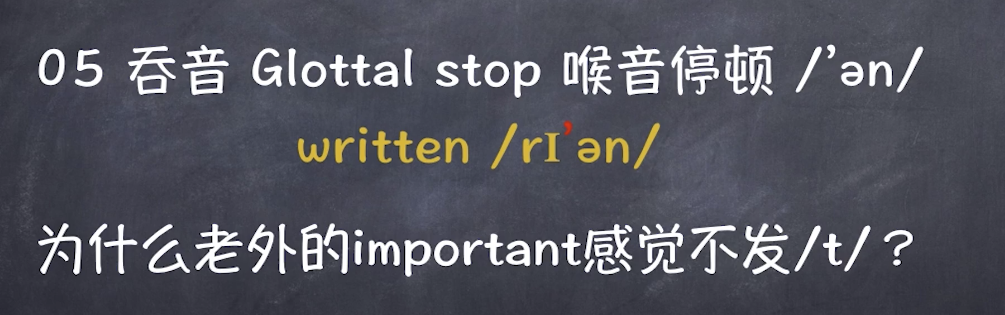
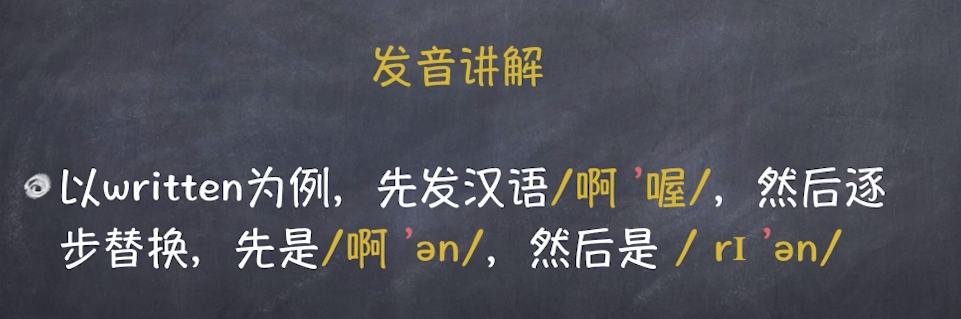

/tən/ /dən/ 的音节里面可以这样
略读 h-dropping
/h/不发音,常见he,his,him,her
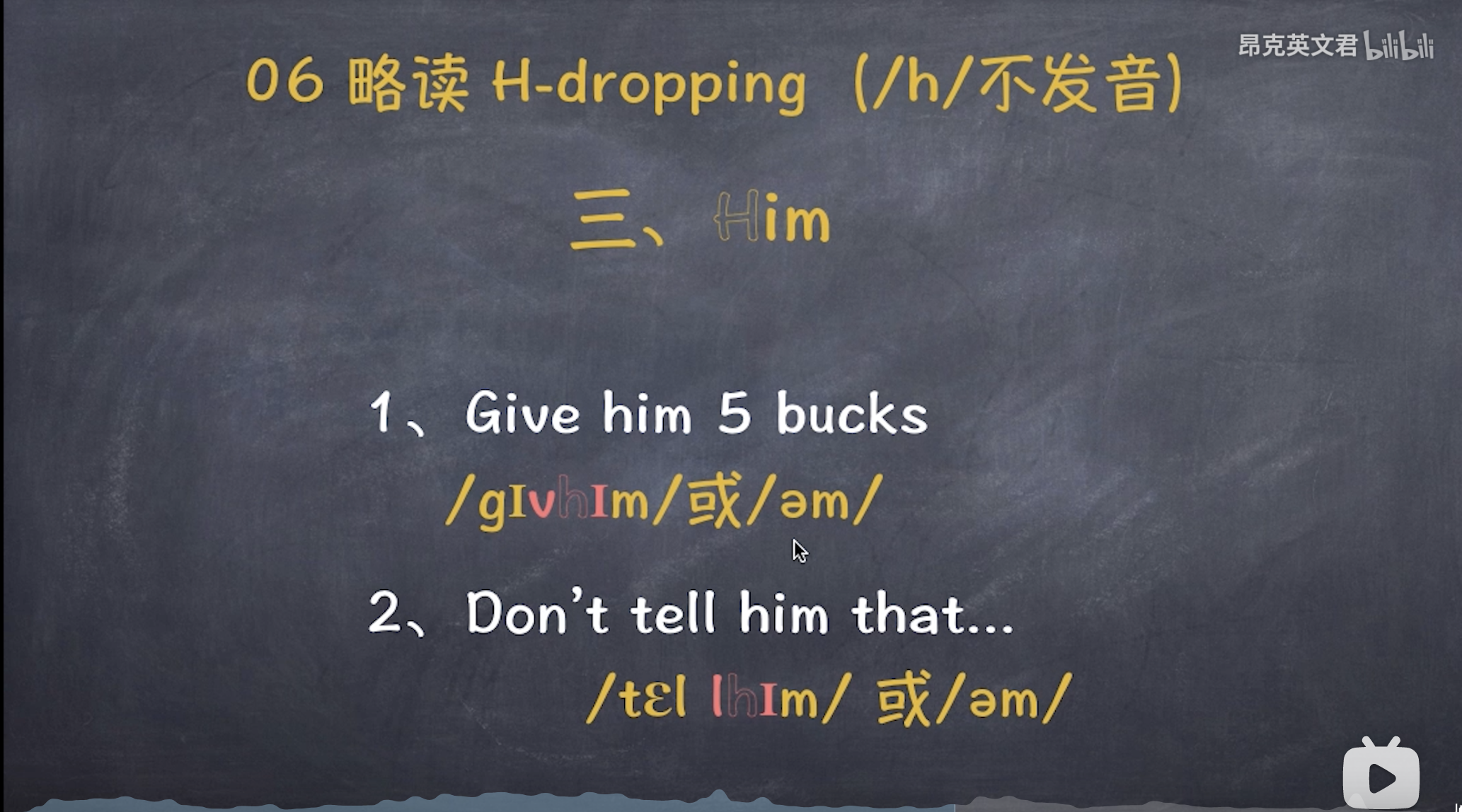
i经常弱读为e,所以give hime读为后面的,这个经常用后面的
略读 g-dropping

变音 Fusion

100个最常见的英语单词发音
参考 , 包含了常见单词的弱读,比如him, to, do, of等。
笔记
正常schewa:
- a,an,that, for, as( he’s as tall as me), do, at, but, from, or, an, one, should, could, so, some, than
不弱读的:
- This, by, they, we, say, out, also.
意群结尾p不发音,what’s up
1期:
- the: the发音后面的/ə/ 当the后面接元音时可变成/i/
- I am: I’m 有时只有一个音/m/, I’m sorry / m_ ‘sorry/
- you are: yer.
- It is: /its/ 有时可省略元音 /ts/ ts cool
- we are: /wər/
- they are: /ðər/
- to: tə, go to时, t变d
- Of: /əv/ 在kind of, sort of里省略/v/, kanda
- and: no /d/ or just /n/, ex: And I
2期:
- With: 后面轻音化, /θ/
- he, him, 省略/h/, ex: what does he want
- You: /jə/
5期:
- Who /u/, ex: Anyone who wants to come can come.
6期:
- Can /cən/
- Him /əm/. Give him: /givem/
7期:
- into /ində/. 这里的t不遵循t发音规则。
8期下:
- Its: /ts/ 没有前面/i/了。
10期下:
- give是实词,但give me时弱读, give me that: gimme 省略v
- us: əs
/t/发音
True T
开头或者重音节,或者后面接r。
- True T Rule 1: At the beginning of a word
- Exception #1: in the TR cluster (train, try) – then it can sound like a CH
- Exception #2: the words to, today, tomorrow. These may begin with a Flap T.
- True T Rule 2: At the beginning of a stressed syllable (attain, until). This includes secondary stress. In a dictionary, secondary stress is marked with this: ˌ Primary stress is marked with this: ˈ
- Exception: when it’s followed by R (attribute, attract)
Stop T
- How to make a Stop sound: Stop T vs. No T: Buy vs. bite
- Stop T Rule 1: When the T is followed by a consonant sound (definitely, bluntly) 后面接辅音
- Exception: when the sound before the T is an R. Then it’s a Stop T (partly) : r+t+辅音 ,t不变
- Stop T Rule 2: Make the T a Stop T when it’s the last sound in a thought group. :意群结尾
- Exception: when the T is in a cluster, then we usually pronounce it (fact, best) :
Flap T
- 类似d的发音
- 发生flap T情况
- Flap T Rule 1: a T is a Flap T between two vowels or diphthongs (beautiful, city) 元音间 If a ‘t’ is between two vowels, whether in a word or between two words, it will be pronounced as a ‘soft d.’
- Exception: If the T begins a stressed syllable. Then it’s a True T (attain, attack) 重音上
- Flap T Rule 2: a T is a Flap T after an R before a vowel or diphthong (party, dirty). Applies to linked phrase: (a lot of, about it)
- Exception: if the T begins a stressed syllable. Then it’s a True T (partake)
- Flap T Rule 1: a T is a Flap T between two vowels or diphthongs (beautiful, city) 元音间 If a ‘t’ is between two vowels, whether in a word or between two words, it will be pronounced as a ‘soft d.’
例子
- it always
Drop T
- Dropped T Rule 1: T can be dropped after N (center, internet) nt的t会省略
- Exception: when there is a syllable split between N and T (until, intense)
- Dropped T Rule 2: Americans often drop the T between two other consonants (exactly, perfectly). This applies to phrases where two words link (just because)
- Exception: Not when the consonant before the T is an R (partly)
例子
- shouldn’t, didn’t,won’t
总结
t前面是n? drop T
t前面是辅音?
- 后面是辅音? drop T
- 后面是元音? True T 待定。
t前面是元音?
- 后面是元音? flap T
- 后面是辅音? stop T
t是意群结尾? Stop T. p也类似。
杂记:
t+辅音里的t省略, 其实是停顿,但和省略差不多
nt比较特殊: nt+元的t省略, nd+辅的d省略
True T: 单词开头、被重读
总结2
参考: https://www.youtube.com/watch?v=xSO6bU8j4sc
- Top 接元音,正常t 发音。
- stop s 后面,浊化
- Setback 接辅音 嘴一闭上就完成发音,stop T
- better 元音中间 flap T,像 d 一样
- button global 吞音/ten/ -> /en/
- Winter n后面 drop T.
参考: https://www.youtube.com/watch?v=ASWKeNS6Z2g
- 单词开头/有重音音节的第一个 t, true T
- 元音中间 flap T
- 单词结尾 t, hold T. 就是不发音,是 t 到了舌头上方位置,但是不送气。I can’t, last night. 单词之间也这么读
- Glotal T,吞音 /ten/ -> /en/
- n + t 不读 t interview -> inerview
- 辅 + t + 辅: t不发音
/d/发音
nd+辅的d省略
重读和弱读
重读
一般来讲我们应该重读content words, 就是有实际内容、实际意义的词,例如:名词,实义动词,形容词,副词,数量词。名词方面,比如像mountain, history等;实义动词就是真正发出动作的词,比如像establish, jump等;形容词比如像stunning, terrifying这样的词;副词方面比如quickly, extremely等。这些词都是有实际意义的,也就是我所说的内容词,来表达句子意义的词,所以我们应该把它们做重读的处理。
一般来讲哪些单词不重读,就是function words功能词,即那些起到语法功能作用的词,比如像代词,介词,限定词,连词以及助动词等等,都是语法结构会运用到的词,这些词对句子的意义并不构成直接的影响。什么样的词属于限定词,比如像冠词the, a/an; some, few, my都是限定词;助动词像be动词,be, do, must这些都属于助动词;介词after, of, above, opposite, out of, on behalf of这些有介词意义的短语也包括在内。还有像连词,比如and, so, 还有代词this, him, our, you, it, 这些词在句子当中是起到语法意义的词。
总结: 重读的只有副词、名词、形容词、动词。但content words有时也不会重读,如果还有其他的重读的词的话。
弱读
1、重读的单词不会出现弱读现象,要读的响亮
这些词一般是表示句子含义的词,如名词,动词,副词,形容词 (today 今天, apple 苹果)
2、非重读的部分的单词要读轻
这些词一般起到语法功能,如介词、连词、助动词等 (and 和, but但是,for为了)
弱读现象存在于句子的非重读单词部分
对于句子非重读部分的单词
1、如果有弱读发音,就可以进行弱读
2、如果没有弱读发音,发本来的音即可
不能弱读情况
1、句子最后一个单词不能弱读
2、特意强调的单词不能弱读,要重读
英音美音区别
todo
发音纠正
line mine fine time 注意ai 是变化的。
It takes a long time to achieve our dreams.
其它
视频: https://www.bilibili.com/video/BV1SZ4y1K7Lr?p=6&spm_id_from=pageDriver
- 元音挨着元音不容易读,所以才会区分a和an
- 同化&异化
- 同化:前面音 改变
- 常见爆破音: k,t,d, 后加辅音,前面音发一半,也叫失去爆破。
- 浊音变清音,比如have to, of course, 的v变f.
- inperson读imperson, n->m,嘴唇闭合。
- 同化:后面音 改变
- 比如变复数读音
- 相互作用
- s+j: bless you. z+j:as you wish. t+j: meet you. d+j: did you. 类似的educate, tissue.
- 辅音连读
- 异化, r接元音会读r, 否则不发音
- 同化:前面音 改变
- 省音: t,d。 来自其他视频,t+辅音里的t省略,nt+元的t省略, nd+辅的d省略
- 节奏: 等时性。